 |
| World Map, Circa 1900 |

Showing posts with label William K. Vanderbilt. Show all posts
Showing posts with label William K. Vanderbilt. Show all posts
Tuesday, December 9, 2025
Gilded Age Travel: The Mills Family, Friends & Servants
During the 2025 holiday season, the mansion was decorated with a travel theme to recognize the importance of travel to the Mills family, their servants, and friends. Rooms featured specific countries where family or friends traveled as well as countries reflecting the origins of collections within the house. Ruth and Ogden Mills traveled to Europe nearly every spring. They often went to visit family, but they also traveled to see landmarks, museums, and the natural beauty of other lands. Technological advancements during the Gilded Age created the ability for wealthy Americans to travel for leisure purposes and as the era progressed, more middle class families also began to travel for vacations.


Friday, December 30, 2022
Masquerade! Paper Faces on Parade!
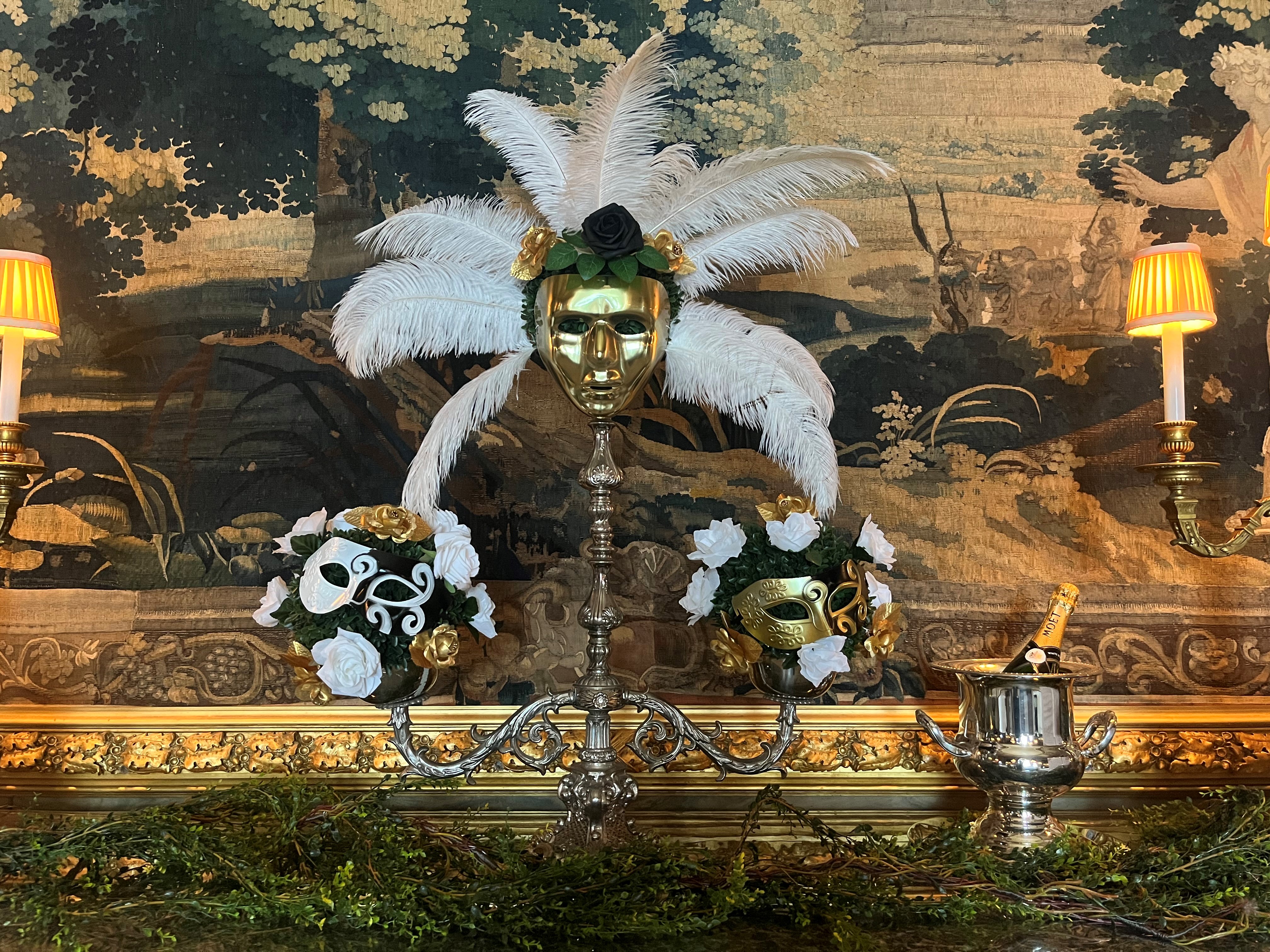
The Christmas season is always a grand affair at Staatsburgh! The site has elaborate decorations that evoke the decadence and over-the-top nature of the Gilded Age. Quite often, the holiday decorations are aligned with a theme and in 2022 that theme was masquerade. Masks adorned various Christmas trees and tables throughout the mansion and the strains of Phantom of the Opera's 'Masquerade' could be heard in the dining room (hence the borrowed lyric in the title of this essay.) Masquerade balls evoke a sense of mystery and opulence that was most commonly associated with 16th-century Venice and the Carnival. Since wearing a mask could act as a disguise, there was an element of thrill and intrigue about not knowing the identity of your dance partner. Although masquerade balls fell out of fashion the following century, they became popular again in 18th-century Europe. Given that Gilded Age décor frequently copied 18th-century European tastes and styles, it was only natural that masquerade balls were once again part of entertaining .
 |
| Banquet table in the Dining Room, December 2022 |
Saturday, March 28, 2020
The Consummate Gentleman: Winthrop Rutherfurd and Some of His Leading Ladies
The press was enamored of many dashing gentlemen during the Gilded Age, but no one quite so much as Winthrop Rutherfurd. "Winty" was tall, handsome, and of good stock. His father, Lewis Morris Rutherfurd, was a pioneering astronomer, but Winthrop also descended directly from Peter Stuyvesant who was the head of the Dutch colony of New Netherland, and from John Winthrop, the first governor of Massachusetts. Edith Wharton once referred to him as the "prototype of my first novels." Perhaps she thought of him as she wrote male characters who she wanted to portray the discreet proper gentleman or ideal suitor. Rutherfurd visited Staatsburgh multiple times and his family became connected to the Mills family when his niece married Ogden Livingston Mills in 1911.
His three best-known loves span different eras of his life, but there were also probably countless others that never became public record. How many women succumbed to the charms of Winthrop Rutherfurd? We may never know....
 |
| Winthrop Rutherfurd, circa 1895 |
His three best-known loves span different eras of his life, but there were also probably countless others that never became public record. How many women succumbed to the charms of Winthrop Rutherfurd? We may never know....
Tuesday, February 27, 2018
Love in the Gilded Age: Successful Second Marriages
During the early years of the Gilded Age, divorce was quite uncommon and a reason for immediate expulsion from Gilded Age society. However, within a couple decades, divorce was more frequent even among families like the Vanderbilts and Astors. A few groundbreaking divorces from those high up in society, and more couples decided not to remain married to individuals they despised. Many Gilded Age marriages, especially among the upper classes, were not love matches. Parents would push for and even arrange certain marriages in order to cement a partnership, elevate social status, or increase finances, but the individuals were frequently ill suited to each other. Many of these marriages ended in divorce, but what often resulted from these divorces was a happy second marriage.


Subscribe to:
Posts (Atom)