Welcome to Staatsburgh State Historic Site's blog! Learn more about the Gilded Age home of Ruth and Ogden Mills!
Showing posts with label Beatrice Mills Forbes. Show all posts

Saturday, December 18, 2021

Christmas in the 1920s

Christmas as a holiday has continuously evolved over the centuries and decades, but many modern traditions have deeply seated historic roots.  Many Christmas traditions in England and America began during the reign of Queen Victoria who led the British empire from 1837-1901.  After she married Albert of Germany, many German traditions such as decorated Christmas trees became increasingly common in England and soon spread across the ocean to the United States.  Several years ago we wrote about many of the traditions that became stalwarts of Christmas during the Gilded Age (see previous Christmas essays here), but this essay looks forward to the 1920s.  The post WWI world was changing, and new technology brought a new dimension to Christmas celebrations.  But while the United States embraced the new, there was still the tendency to look backward and dream of wholesome Christmases past before the world was torn apart by war.  Christmas was a comfort and communal celebrations of the holiday served as a balm to families (Christian ones, at least) finding their place in a new decade.


Tuesday, July 25, 2017

A Titled Affair: Lady Eileen Forbes Weds the Future Marquess of Bute


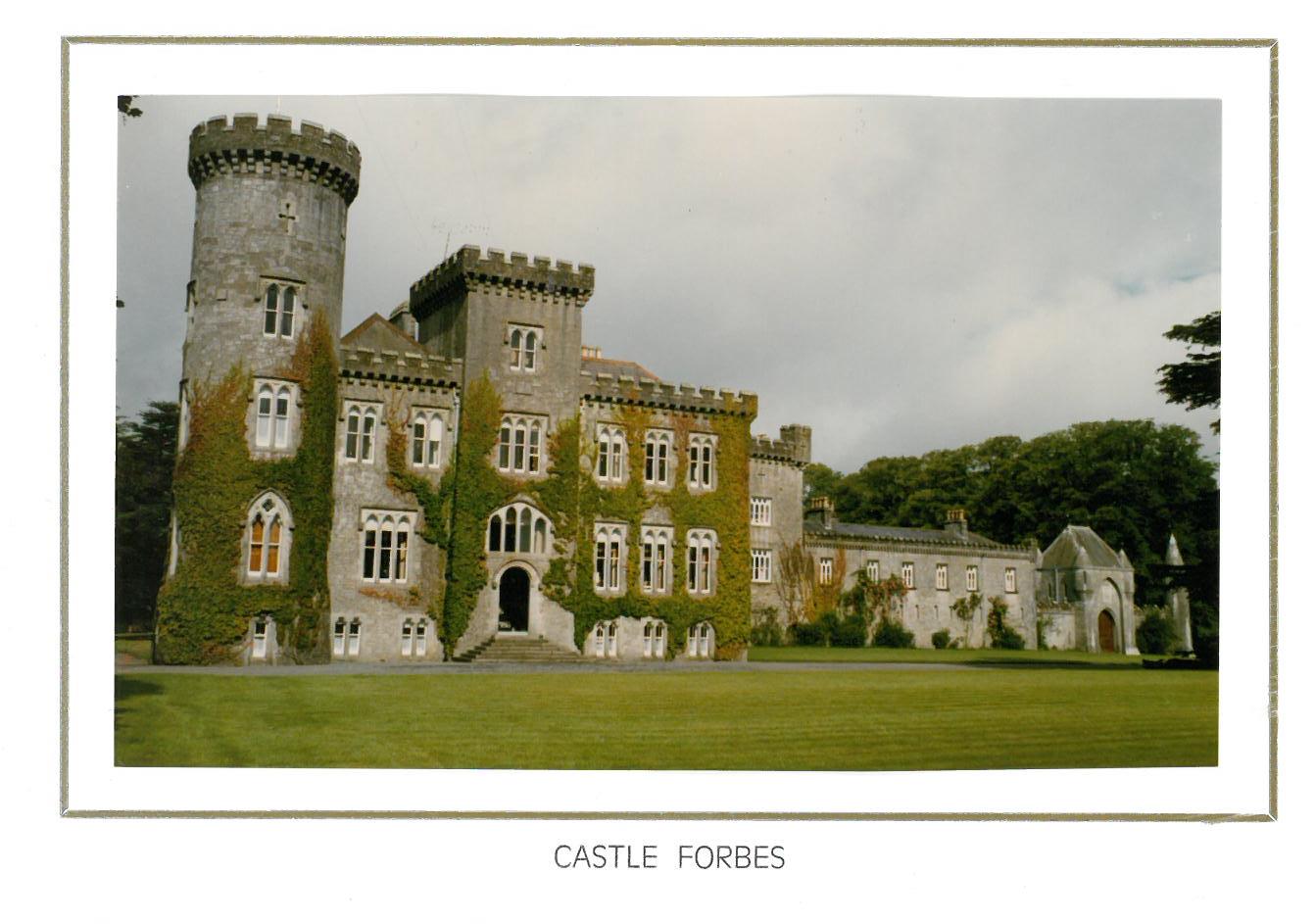
Castle Forbes, County Longford, Ireland

On April 26, 1932, crowds in Newforbestown, County Longford, Ireland clamored to catch a glimpse of the lovely bride, Lady Eileen Forbes. The event was very exciting for a town with less than 1000 residents that was named after the Forbes family. The Earl of Granard had resided in the region since 1691 and the family’s residence at Castleforbes was central to the town’s identity. Adding to the excitement was the equally elevated status of the groom, John Crichton-Stuart, the Earl of Dumfries who was the eldest son of a Marquess from one of the most prominent families in Scotland. The affair was a celebration for both the family and the village.

Friday, April 28, 2017

The (Mills) Family Jewels: Boucheron of Paris and the Ultimate Gilded Age Status Symbol

Recently the site was contacted by an intern in the Heritage Department of the French jeweler, Boucheron, a renowned company that has been supplying the wealthy and fabulous with jewelry since 1893.  He wanted to learn a bit more about the Mills family because he had been scouring the sales archives and noticed that they were very regular clients of Boucheron for over 30 years from the 1890s to 1920s.  They purchased jewelry pieces monthly that were delivered to them in London, Paris, and New York.

Home of Boucheron, 26 Place Vendomme, Paris (Photo credit: Wikimedia User Delud)

Jewelry has always been utilized as a status symbol and this was certainly true during the Gilded Age when unprecedented wealth and the desire to stand out in society created a market for fine jewelry.  Women like Ruth Mills wore jeweled tiaras, brooches, bracelets and necklaces to society events and balls.  Rare gems and large diamonds worth millions of dollars highlighted the wealth and social status of the women they adorned.  We can compare it to the red carpet at the Oscars in the present day when "Hollywood royalty" parade past the press wearing fancy gowns and jewelry worth millions and millions of dollars.

Through this connection, we were able to receive photos of some of the actual pieces that Ogden Mills purchased from Boucheron.  Since Staatsburgh does not have personal affects from the family, this provided a wonderful opportunity to look at actual pieces of jewelry Ruth Mills and her daughters would have worn in society.

Thursday, July 30, 2015

The Granard Bequest Exhibition at Dublin Castle

Recently, items once owned by the Mills' daughter Beatrice were on display at Dublin Castle. Beatrice married an earl who was originally from Ireland, and they were rumored to have met at Dublin Castle.  Since no one on staff was able to make a quick jaunt over to Ireland, we were happy to be able to learn more about the exhibition from curator Joanne Bannon who was instrumental in researching, creating, and installing the exhibition.

One of the prevailing stories of the Gilded Age was the marriage of wealthy American heiresses to titled Europeans.  These transatlantic marriages brought millions of dollars of American money into Europe, primarily England, and gave newly rich American families the opportunity to boast of a connection to royalty and perhaps include a countess in the family.  The Mills family fit perfectly into this trend when Beatrice, one of Ruth and Ogden's twin daughters, married Bernard Arthur William Patrick Hastings Forbes, the 8th Earl of Granard.  Originally from Ireland, Lord Granard was Lord-in-Waiting to Edward VII from 1905-1907, Master of the Horse to both Edward VII and George V, and served as a member of Seanad Eireann for twelve years.  His eldest son, Arthur, succeeded him as Earl when he passed away in 1948.

Countess (Beatrice Mills) and Bernard Forbes, 8th Earl of Granard, married in 1909

Tuesday, September 2, 2014

American Heiresses & English Lords: A Match Made in Heaven?

The staff at Staatsburgh are great fans of the television program Downton Abbey. We love the show because it illustrates the way a great estate like Staatsburgh would operate with opulent dinner parties and a strict hierarchy of servants. Watching the show can bring to life situations that would have happened here at Staatsburgh. We love it so much that we started a special Downton Abbey themed tour at the site. The tour will be offered again in September and October (check out our facebook page for dates), and in the spirit of Downton Abbey, this blog takes a moment to look at marriages between American heiresses and the European aristocracy.

There has been some interest in the practice of American heiresses marrying titled Englishmen because of the show.  On Downton Abbey, Robert Crawley, the Earl of Grantham, is married to an American woman, the former Cora Levinson, daughter of a dry goods millionaire. At Staatsburgh, Ruth Livingston Mills used her sister's position in English society after marrying an Englishman to help secure her daughter Beatrice's marriage to an Earl.  

Downton's Cora Levinson arrived in England in 1888 at age 20 chaperoned by her mother. She was presented at court and enjoyed a London Season. During a London Season, a young lady would attend countless parties and balls with hopes of meeting a potential suitor. By the end of Cora's first Season, she was engaged to the future Lord Grantham who needed to secure funds to rescue his large estate. What began as a marriage of convenience soon grew into love and on the show the marriage between the Earl and Countess of Grantham is portrayed as loving and happy. Other women who were forced into marriage like Conseulo Vanderbilt, Duchess of Marlborough, were not as lucky in love and many of these marriages later dissolved. Yet like the fictional marriage between Cora Levinson and the Earl of Grantham, a great influx of American money helped to maintain and preserve the great estates of the English nobility.